Alexandre Gurita26 October - 3 November 2025
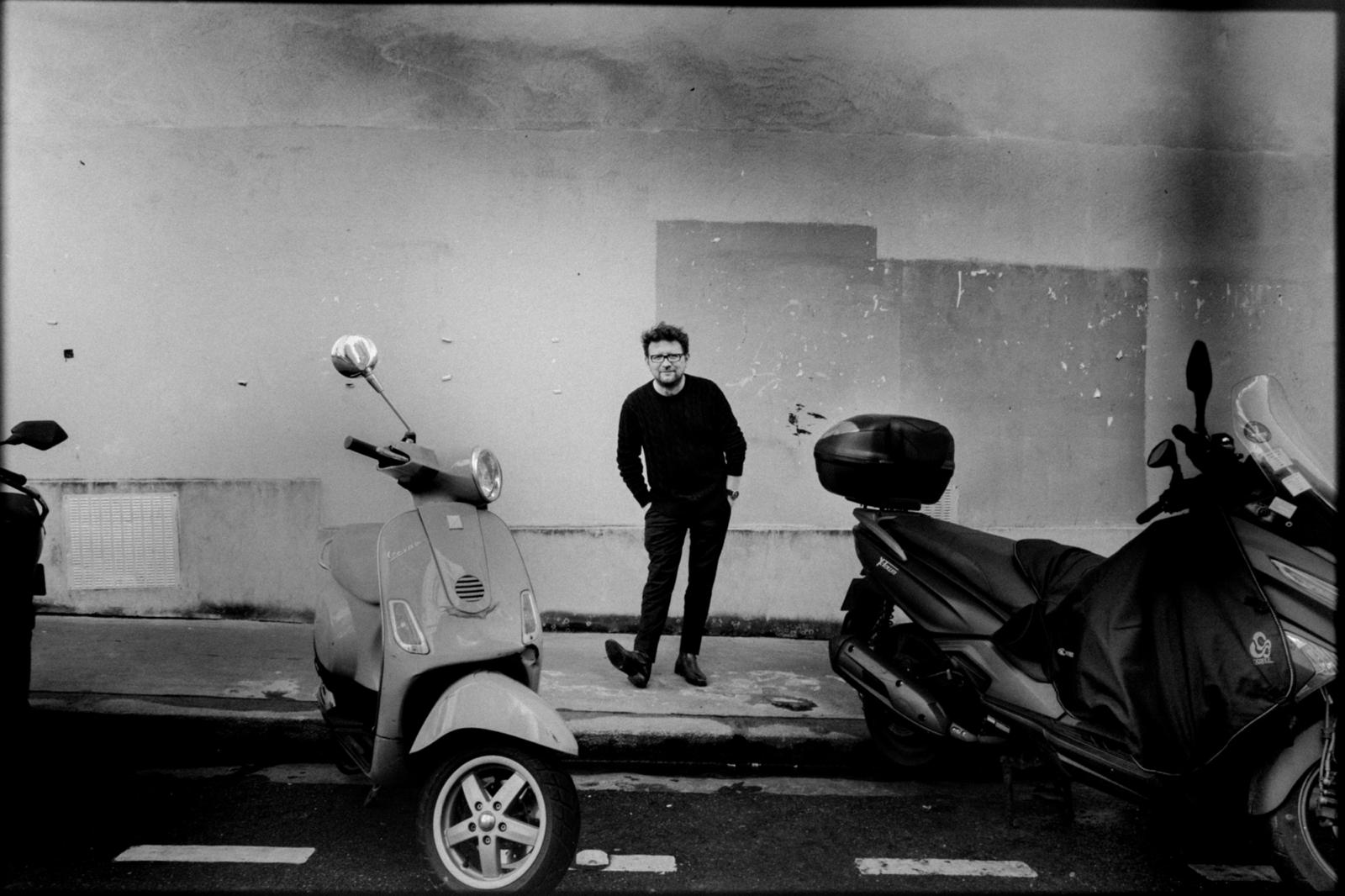
Alexandre Gurita’s residency at Zico House, in collaboration with Artémed and the Académie Libanaise des Beaux-Arts (ALBA, University of Balamand), unfolds as an artistic protocol rather than a production stay. It questions the very conditions of art once the work of art has been renounced. Through encounters, a lecture and shared research, Gurita explores the horizon of Invisual Art, developed with Ricardo Mbarkho since they met in Paris in 1998. The residency becomes a field of experimentation in which art coincides with its own disappearance. Its aim is not to make works but to shift the artistic act into social, economic and institutional reality. At ALBA, the workshop led by Gurita and Mbarkho and the creation of the Invisual Art Collection affirm this passage from the work of art to the condition of art. At Zico House, the public lecture introduces this paradigm to a wider audience. The residency thus replaces production with experience, and visibility with thought.
Programme
Friday 31 October 2025
Lecture at 6 pm at Zico House.
By Alexandre Gurita, artist and Director of the Biennale de Paris, and Ricardo Mbarkho, artist and Director of Research at ALBA – University of Balamand.
Title: Introduction to Invisual Art
Invisual art questions the very possibility of art in a world saturated with images, forms and objects. It consists neither in producing nor in representing, but in shifting the artistic act towards reality itself, regarded as the medium of the work. This paradigm replaces the logic of the artwork with that of activity: the artist no longer makes an object but formulates an experience, a model or a socio-economic device that takes on an artistic dimension through its symbolic and critical scope. The artist conceives its economy, strategy and mediation as intrinsic components of the practice. Invisual art is not one more movement added to the history of art: it reconfigures the very definition and function of art, freeing it from the art market. It opens up a space where creation and existence coincide, and where the artist ceases to be a producer of works and becomes a producer of the conditions for art.
Biographies
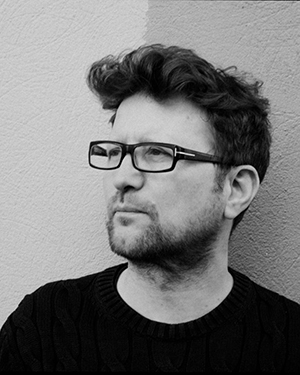
Alexandre Gurita
Artist, Director of the École nationale d’art de Paris (ENDA) and of the Biennale de Paris, founded in 1959 by André Malraux.
Having experimented with many art forms and concluded that everything had been done and redone, he gave up producing works of art altogether in 1998, considering that they hindered his creativity. That same year he met Ricardo Mbarkho at the École nationale supérieure des Beaux-Arts de Paris (ENSBA). Together they explored new artistic approaches between 1998 and 2001, which later led to invisual art.
He has given lectures and led workshops at venues including the Académie Libanaise des Beaux-Arts (Beirut), the Guggenheim Museum Bilbao, the Yale School of Art (New Haven), Apexart (New York), Columbia School of the Arts (New York), the Queens Museum of Art (New York), the School of Visual Arts (New York), the Grand Palais (Paris), the Musée d’Art Moderne de la Ville de Paris, the Palais de Tokyo (Paris) and Paris 1 Panthéon-Sorbonne University.
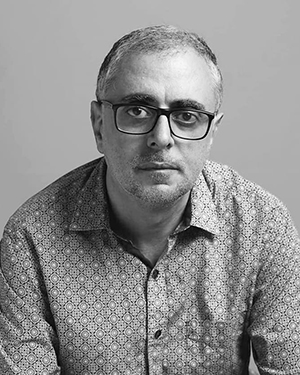
Ricardo Mbarkho
PhD. Artist, Director of Research and Director of the Centre for Research and Creation at the Académie Libanaise des Beaux-Arts (ALBA, University of Balamand).
In his work, he studies and theorises the aesthetic, economic, political and social conditions and measures of an art that frees itself from the idea of the artwork, of the audience and of context. As an ideal type, this is research-creation of an art without art.
In 1998 he met Alexandre Gurita at the École nationale supérieure des Beaux-Arts de Paris (ENSBA). Together they explored new artistic approaches between 1998 and 2001, which later led to invisual art.
He has given lectures and led workshops at venues including Aix-Marseille Université, ANdÉA (Strasbourg), Ars Electronica (Linz), the ARTos Foundation (Nicosia and Madrid), Ashok Jain Gallery (New York), the Biennale de Paris, the École nationale d’art de Paris, the École nationale supérieure des Beaux-Arts de Paris, EMAF (Osnabrück), IMéRA (Marseille), the Institut Supérieur des Beaux-Arts de Sousse, the Jeu de Paume (Paris), MuCEM (Marseille), Transmediale (Berlin), UNESCO (Paris), Alexandria University, and the World Summit Contributory Conference on ICT & Creativity (Vienna).
ZICO HOUSE
Independent cultural centre
Director: Moustapha Yamout
174 Spears Street - Sanayeh
Beirut - Lebanon
tel. +961 (0)3 810 688
A co-production by ARTEMED and ALBA-UOB